Serving Nacogdoches, TX and surrounding areas. (936) 305-0452
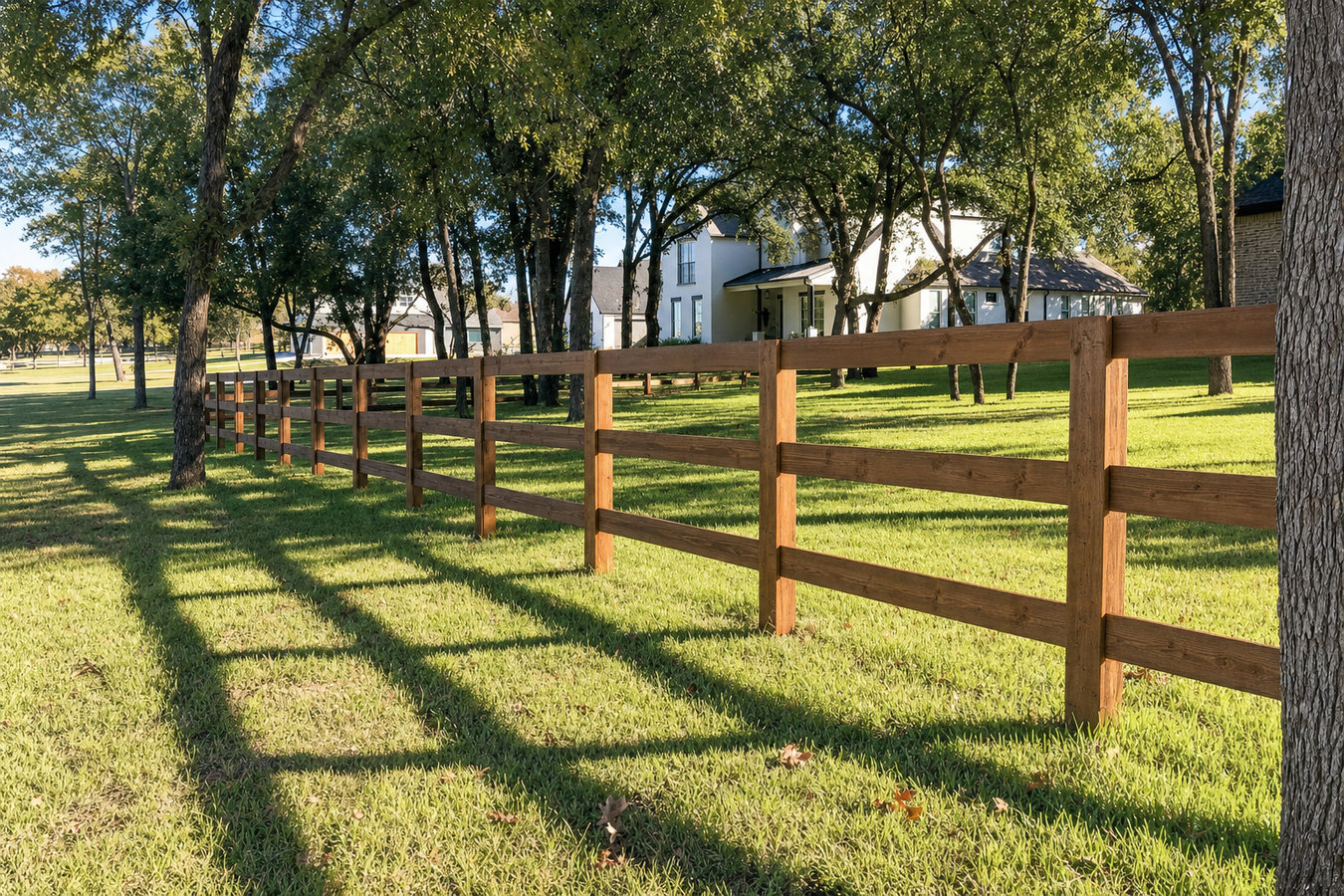
Your livestock need a fence that holds up in East Texas clay, dense brush, and heavy rain. We install barbed wire, woven wire, and pipe fencing across Nacogdoches County with proper corner bracing and post depth for this soil.
Farm and ranch fencing in Nacogdoches means installing agricultural-grade wire fence - barbed wire, woven wire, or pipe - with solid corner bracing and posts set at the depth East Texas clay demands, most pasture jobs wrapping up in one to three days depending on acreage and how much brush clearing is needed first.
Rural fencing is a different job than residential fencing. The materials are different, the terrain is different, and the stakes are higher when a gap in the wire means livestock on the road at 2 a.m. In Nacogdoches County, that reality is familiar to anyone running cattle, horses, goats, or hogs on East Texas land. The right fence type depends on what animals you have - and a contractor who does not ask that question before recommending a fence is not paying attention to your situation.
If you are also looking to contain smaller animals or house pets on your property, our pet and dog fencing service handles the smaller-scale containment needs that agricultural wire is not suited for.
Walk your fence line and look for posts that tilt or rock when you push on them. In Nacogdoches's clay-heavy soils, repeated wet-dry cycles gradually loosen posts over time. A leaning post puts stress on the wire running between it and the next post and will eventually pull the whole section out of line. Catching this early means replacing a few posts rather than rebuilding entire sections.
Sagging wire between posts is a clear sign the fence has lost its tension or that posts have shifted. In East Texas, fast-growing vegetation can also push into fence lines and force wire out of position. If livestock have already tested the fence and found weak spots - or if you can see gaps wide enough for an animal to push through - it is time to call a contractor.
Look closely at the base of each post where it enters the soil. Soft, dark, or crumbling wood at ground level is rot - a common problem in Nacogdoches given the area's high rainfall and humidity. A rotted post looks solid from a distance but has no real holding strength in the ground. Catching it early lets you replace posts rather than rebuilding the fence.
If you are bringing in animals that were not there when the original fence was built - cattle, horses, goats, or hogs - your existing fence may not be the right type or height. Different livestock have very different fencing requirements, and a fence that worked fine for one species can be completely inadequate for another. This is one of the most common triggers for a fence replacement on Nacogdoches County rural properties.
We install the full range of agricultural fencing used on working properties across Nacogdoches County. Barbed wire is the most common choice for cattle operations over large acreage - it covers distance economically and holds up well in East Texas conditions when corners are braced properly. Woven wire, sometimes called field fence, gives more reliable containment and works for a wider range of animals, including horses, goats, and hogs. For properties where gates and entrance areas need something more substantial, pipe fencing is the right choice - it is heavy, highly visible, and essentially permanent when set correctly. If you want a cleaner look along a road frontage or near your homestead while keeping working fence in the pasture, our wood fence installation options in post-and-rail style are a good complement.
Every farm fencing job starts with an on-site walk. We look at your terrain, your soil, your existing fence if any, where gates need to go, and what brush or timber clearing is required before posts can be set. We give you a written quote that separates materials, labor, and any clearing work so you can see what you are paying for. We ask about your animals before we recommend anything - the right fence for your land depends entirely on what you are containing or keeping out.
The most economical choice for large cattle operations. Covers acreage quickly when corners are properly braced for East Texas soil.
Better containment than barbed wire alone. Works for cattle, horses, goats, and hogs. A good choice when multiple animal types share a property.
Heavy-duty and essentially permanent. Best for gates, working pens, and high-traffic areas where wire fence would take too much wear.
A cleaner look for horse properties, road frontage, or homestead areas where appearance matters alongside function.
Properly braced corners carry the tension of the entire fence line. We size every brace for the wire type and property conditions.
Sized for the weight and width of each opening. We use hardware rated for outdoor farm use and set gate posts to handle the load.
Nacogdoches County sits in the Pineywoods region of East Texas, where soils shift between heavy clay and sandy loam depending on where you are on a given property. Clay soils hold water and can heave posts sideways as the ground swells and dries through the seasons. Sandy areas drain fast but do not grip posts as firmly. A contractor who knows this region adjusts post depth and anchoring method based on what they find underfoot - not a one-size approach that may work in drier Texas counties but fails here within a few years. Dense East Texas brush and timber also mean that many fence lines on Nacogdoches County rural properties require clearing before posts can even be set. We discuss this upfront and put any clearing scope in writing before a crew arrives, so there are no surprises on cost or timeline. Homeowners in Diboll and Crockett face the same wooded terrain and soil challenges, and we bring the same preparation to jobs across the region.
Nacogdoches County also has an active agricultural community - cattle operations, horse properties, and small farms are common throughout the county. The type of animals you are running shapes every fencing decision, from wire height and spacing to whether barbed wire or woven wire makes more sense. A contractor who does not ask about your animals before recommending a fence type is guessing. The Texas A&M AgriLife Extension publishes practical guidance on agricultural fencing suited to Texas conditions, and the American Fence Association outlines standards for quality farm fence installation.
When you first reach out, we will ask several questions before quoting anything: how many acres or linear feet, what animals are involved, whether the land is wooded or cleared, and whether this is new fence or a replacement. These questions change the price and approach significantly. We respond within one business day and schedule a free on-site visit.
We walk the fence line with you - checking terrain, soil, tree coverage, existing fence, and gate placement. This visit usually takes 30 minutes to an hour. Within a few days you receive a written quote that separates materials, labor, and any clearing work. No combined totals that hide what you are actually paying for.
Before installation begins, confirm your property boundaries - a survey is ideal on any boundary fence project. Move livestock away from the work area, and make sure any clearing that is your responsibility is done before the crew shows up. We tell you exactly what to expect on day one so there is no confusion.
Corner and gate posts go in first since they carry the most load. Line posts follow, then wire is stretched and attached. When the work is complete, walk the entire fence line with us - check that posts stand straight, wire is evenly tensioned, and every gate swings and latches securely. This is your chance to raise anything that does not look right while the crew is still on-site.
Free on-site estimate. Written quote before work starts. We ask about your animals before recommending anything.
(936) 305-0452Cattle, horses, goats, and hogs all require different fence types, heights, and wire spacing. A contractor who does not ask about your livestock before recommending a fence type is not paying attention to your situation. We start every farm fencing conversation with your animals and your land - not a standard package.
East Texas soil shifts between clay and sandy loam across a single property. We adjust post depth and anchoring method based on what we find on your fence line - not a uniform approach that ignores local conditions. Posts set right for this soil stay plumb through wet springs and dry summers.
Many farm fence contractors lump brush clearing into a combined total so you cannot see what you are paying for. We break out materials, labor, and any clearing work in separate line items. What you agree to in writing is what appears on the invoice.
A farm fence is only as strong as its corners. We build every corner and end assembly with an H-brace sized for the wire type and property conditions - the same standard outlined by the Texas A&M AgriLife Extension for working agricultural fences in this region. A fence with undersized corners pulls inward within a few years.
We have worked on properties across Nacogdoches County and the surrounding region - from small hobby farms to larger cattle operations. The same care around soil conditions, corner bracing, and honest quoting applies to every job, regardless of size.
Secure enclosures designed specifically for dogs and smaller pets - keeping them safely in without the bulk of agricultural fencing.
Learn MorePost-and-rail and board fence options for horse properties and rural homesteads that need a cleaner look alongside working pasture fence.
Learn MoreCall today for a free on-site estimate - livestock on the road is not a problem you want to solve after the fact.